Olive oil has become a staple in many British kitchens. From drizzling over salads to finishing roasted vegetables, it adds flavour, richness, and nutritional value to everyday meals. However, one growing concern among consumers in the UK is authenticity. Many bottles labelled as extra virgin olive oil do not always meet the strict standards that define true quality.
Understanding how to identify genuine olive oil can help you make better choices for both taste and health. This guide explains what extra virgin really means, how to recognise authentic products, and what to look for when shopping in the UK market.
What Extra Virgin Olive Oil Really Means
Extra virgin olive oil is considered the highest quality olive oil available. It is produced from fresh olives using mechanical extraction methods without chemicals or excessive heat. This process preserves the natural flavour, aroma, and nutrients.
To qualify as extra virgin, the oil must meet specific criteria:
- It must be cold extracted, usually below 27°C
- It must have a low acidity level, typically below 0.8 percent
- It must pass professional taste testing with no defects
- It should maintain natural aromas and flavour from the olives
Many producers of cold pressed olive oil UK follow strict harvesting and pressing practices to maintain these qualities. Unfortunately, not all products labelled as extra virgin meet these standards once they reach supermarket shelves.
Why Authenticity Matters for UK Consumers
The popularity of Mediterranean diets has increased demand for premium olive oils across Britain. As a result, the market for extra virgin olive oil UK has expanded rapidly. While this is good for accessibility, it has also created opportunities for misleading labels and lower grade oils being sold as premium products.
Authentic olive oil offers several benefits:
- Higher levels of antioxidants and healthy fats
- Superior flavour that enhances food
- Natural production without chemical processing
- Greater freshness and nutritional value
When consumers understand what genuine olive oil looks, smells, and tastes like, they can avoid spending money on inferior products.
Look for Clear Origin Information
One of the simplest ways to identify quality olive oil is to check the origin information on the bottle.
Authentic producers usually provide detailed information such as:
- Country or region where the olives were grown
- Harvest date or pressing date
- Specific olive varieties used
- Producer or estate information
If the label only says “packed in EU” or “blend of oils from multiple countries,” the oil may have been mixed from different sources and may not represent premium quality.
Trusted retailers and specialist suppliers such as https://laverdeartisan.com often provide transparent sourcing information, which helps consumers understand exactly where the oil comes from.
Pay Attention to Packaging
Packaging plays a major role in preserving olive oil quality. Light, heat, and air can quickly degrade flavour and nutrients.
High quality olive oil is usually sold in:
- Dark glass bottles
- Tins designed to block light
- Properly sealed containers
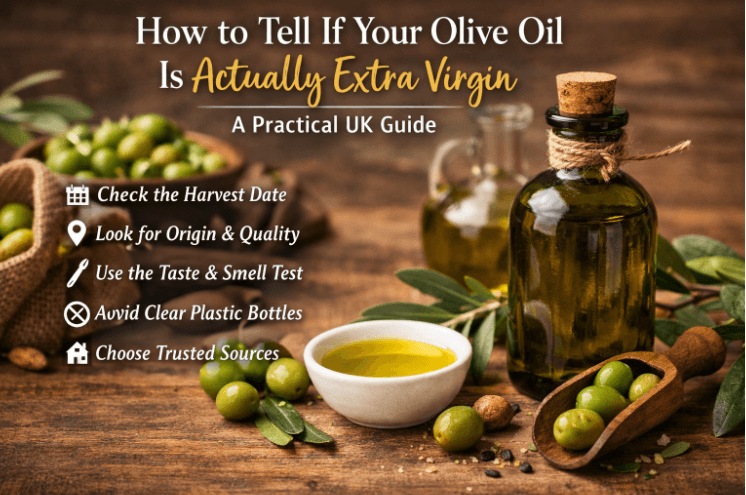
Avoid oils sold in clear plastic bottles, especially if they sit under bright supermarket lighting. These conditions accelerate oxidation and reduce freshness.
When searching for the best olive oil UK, packaging quality often reflects the care taken during production and storage.
Check the Harvest Date
Unlike wine, olive oil does not improve with age. Freshness is essential for both flavour and health benefits.
The best oils usually include a harvest date on the label. Ideally, you should consume olive oil within 12 to 18 months of harvesting.
If the bottle only lists a “best before” date, it may be harder to determine how fresh the oil actually is. Harvest information indicates transparency and quality control by the producer.
Use Your Senses at Home
A surprisingly effective way to judge olive oil quality is simply by tasting and smelling it. Authentic extra virgin oil has distinctive sensory characteristics.
When tasting olive oil, notice the following qualities:
- Fresh aroma that may remind you of grass, herbs, apples, or tomatoes
- A balanced flavour that includes bitterness and pepperiness
- A slight throat tickle, which indicates healthy polyphenols
These sensations are signs of genuine extra virgin oil.
If the oil tastes flat, greasy, or musty, it may be refined or of lower quality.
Professional olive oil tasters often describe authentic oil as vibrant and complex rather than neutral or bland.
The Refrigerator Test Myth
Many people in the UK have heard of the refrigerator test, which claims that genuine olive oil solidifies when chilled. While this can happen, it is not a reliable method.
Olive oil composition varies depending on olive variety and region. Some authentic oils remain liquid at cooler temperatures, while others partially solidify.
Because of this natural variation, refrigeration cannot reliably confirm whether an oil is truly extra virgin.
Instead of relying on this myth, focus on sourcing, packaging, aroma, and flavour.
Understanding the Cold Pressed Label
You may often see the term cold pressed olive oil UK on bottles. This refers to the extraction method used during production.
Cold pressing means that olives are crushed and the oil is extracted without high heat. This protects delicate compounds responsible for flavour and nutritional value.
However, it is important to understand that most genuine extra virgin olive oils are already produced using similar cold extraction methods. Therefore, the phrase can sometimes be used as a marketing term rather than a strict quality indicator.
Still, when combined with transparent sourcing and harvest information, it can be a positive sign of careful production.
How to Choose the Best Olive Oil in the UK
Finding the best olive oil UK does not require expert knowledge. A few simple guidelines can help you identify reliable products.
When shopping, consider these tips:
- Choose dark glass bottles or tins rather than clear plastic
- Look for harvest dates rather than only best before dates
- Check for clear information about origin and olive varieties
- Buy from trusted retailers that specialise in artisan food products
- Taste the oil if possible before purchasing
Specialist food shops and online retailers often carry higher quality oils than large supermarkets. They typically work directly with small producers who prioritise freshness and traditional harvesting techniques.
Common Signs of Lower Quality Olive Oil
Even with careful shopping, it is useful to recognise warning signs that suggest an oil may not be truly extra virgin.
Be cautious if you notice:
- Extremely low prices compared with similar products
- Vague labels that hide the origin of the oil
- Plastic bottles exposed to light in supermarkets
- Lack of harvest or production information
- Flat or greasy taste without bitterness or pepperiness
Producing authentic extra virgin olive oil requires careful farming, early harvesting, and precise extraction methods. These processes involve costs, so unusually cheap oils often indicate lower grade blends.
Why Artisan Producers Often Deliver Better Quality
Many of the finest olive oils available in Britain come from smaller producers rather than industrial manufacturers. These producers typically focus on limited harvests, careful cultivation, and traditional extraction techniques.
Smaller producers often prioritise:
- Hand harvesting olives at optimal ripeness
- Rapid pressing within hours of harvest
- Minimal filtration and processing
- Transparent sourcing and traceability
These practices result in fresher, more flavourful oils that truly represent the olives and the region they come from.
When consumers buy directly from trusted suppliers, they often gain access to oils that would rarely appear in large retail chains.
Read also: What Is Barrier Cream and Why Is It Used
A Better Way to Shop for Olive Oil
Learning how to identify genuine olive oil empowers you to make smarter choices in the kitchen. Authentic extra virgin oil delivers richer flavour, greater nutritional benefits, and a more satisfying cooking experience.
Instead of relying solely on labels, pay attention to freshness, packaging, origin transparency, and sensory qualities. When these elements come together, you are far more likely to be purchasing genuine quality.
Exploring reputable artisan suppliers and understanding the characteristics of true extra virgin olive oil UK will help you discover oils that transform everyday cooking into something far more enjoyable.
With a little knowledge and curiosity, choosing olive oil becomes less confusing and far more rewarding for anyone who loves good food.