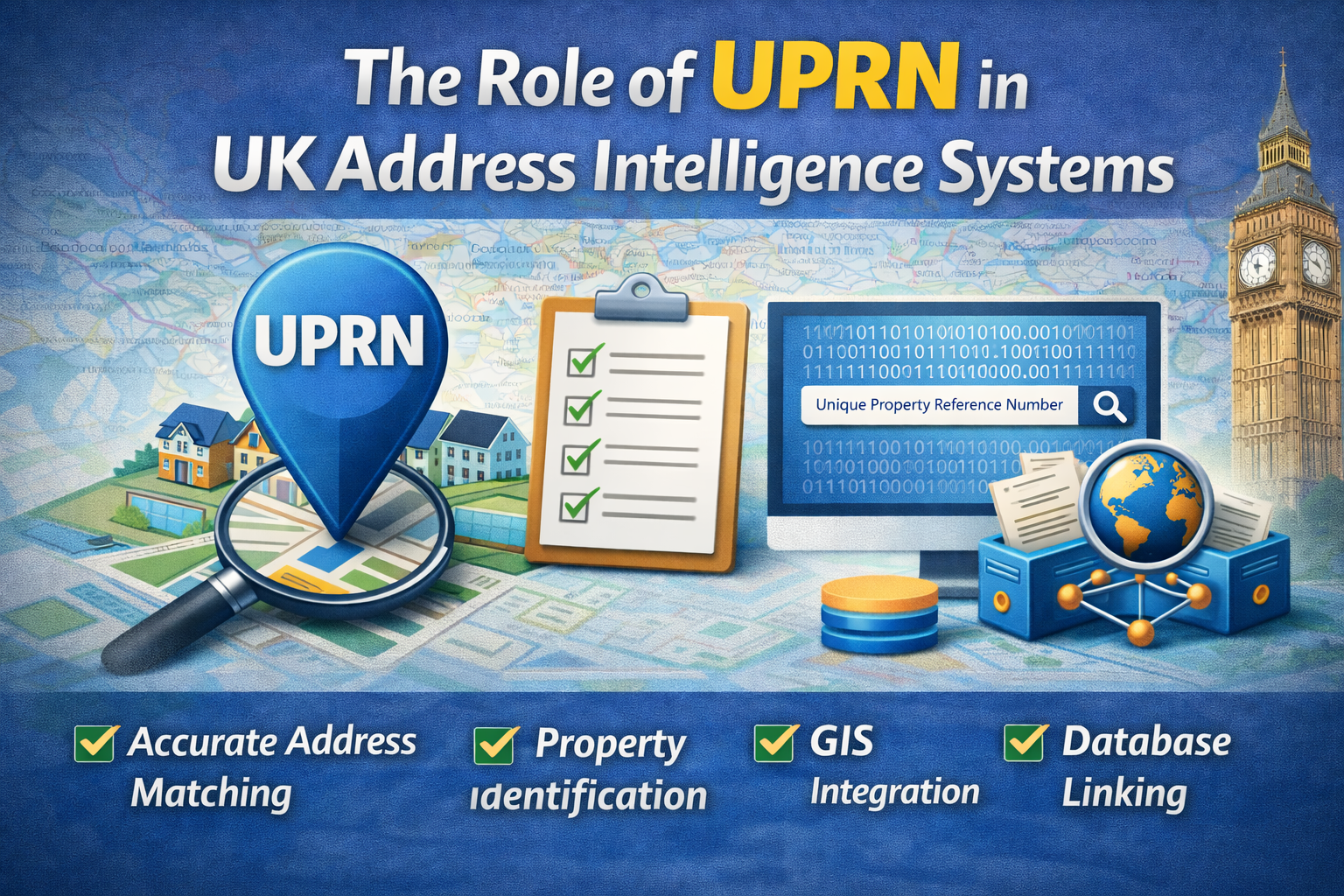
In today’s data-driven environment, accurate and connected information is essential for businesses and public services across the UK. One of the key elements enabling this is the Unique Property Reference Number (UPRN). As organisations increasingly rely on location data, UPRN has become a central part of modern address intelligence systems.
By providing a unique identifier for every property, UPRN helps link data across multiple platforms, improve accuracy, and support better decision-making. This article explores the role of UPRN in UK address intelligence systems and why it is so important for efficient data management.
What Is a UPRN and Why Is It Important?
A Unique Property Reference Number (UPRN) is a unique numeric identifier assigned to every addressable location in Great Britain. This includes residential properties, commercial buildings, and even non-traditional locations such as utility sites or public infrastructure.
Unlike standard addresses, which can change over time, a UPRN remains constant throughout the lifecycle of a property. Even if a building is renamed or renumbered, its UPRN stays the same. This consistency makes it a reliable way to identify and track locations.
The importance of UPRN lies in its ability to remove ambiguity. Traditional address data can vary in format and spelling, leading to confusion and errors. UPRN provides a single, standard reference point that ensures each property is uniquely identified.
Understanding Address Intelligence Systems in the UK
Address intelligence systems are designed to manage, analyse, and use address data effectively. These systems combine data from multiple sources to provide insights that support business operations, planning, and decision-making.
In the UK, address intelligence is used across many sectors, including logistics, utilities, healthcare, and government services. These systems rely on accurate and consistent data to function properly.
However, without a common identifier, linking data from different sources can be difficult. Variations in address formats and data quality can create silos, making it harder to share and analyse information.
This is where UPRN plays a crucial role. By acting as a universal identifier, it allows different systems to connect and communicate with each other seamlessly.
How UPRN Connects Data Across Systems
One of the most powerful features of UPRN is its ability to link data across multiple systems. In many organisations, data is stored in separate databases, such as customer records, billing systems, and service platforms.
Without a common reference, it can be challenging to match records accurately. For example, the same property might appear differently in different systems, making it difficult to identify as a single location.
UPRN solves this problem by providing a consistent identifier that can be used across all systems. By assigning a UPRN to each record, organisations can link data from different sources and create a unified view of each property.
This improves data integration and enables better collaboration between departments. It also reduces duplication and ensures that all systems refer to the same location accurately.
Improving Data Accuracy and Quality
Data accuracy is essential for any address intelligence system. Errors in address data can lead to failed deliveries, incorrect billing, and poor customer experiences.
UPRN helps improve data quality by providing a reliable way to identify properties. Instead of relying solely on text-based addresses, systems can use UPRNs to ensure accuracy.
For example, if an address is entered incorrectly, it can still be matched to the correct UPRN using address matching tools. This ensures that the data remains accurate even when there are minor errors in the input.
In addition, UPRN helps eliminate duplicate records. Since each property has a unique identifier, it is easier to detect and remove duplicates, resulting in cleaner and more organised data.
By improving data accuracy, UPRN supports better decision-making and reduces operational risks.
Enhancing Business Operations and Service Delivery
UPRN plays a key role in improving business operations and service delivery across the UK. In sectors such as logistics, accurate address data is essential for efficient deliveries.
By using UPRNs, companies can ensure that each delivery is linked to the correct property. This reduces the chances of errors and improves overall efficiency.
In utilities and telecommunications, UPRN helps manage service connections and billing. It ensures that services are delivered to the correct location and that records are accurate.
Government agencies also benefit from UPRN by using it to link data across departments. This enables better planning, resource allocation, and service delivery.
Overall, UPRN helps organisations operate more efficiently by providing a clear and consistent way to manage location data.
Supporting GIS and Location-Based Insights
UPRN is closely linked to Geographic Information Systems (GIS), which are used to analyse and visualise location data. Each UPRN is associated with geographic coordinates, allowing it to be mapped accurately.
This connection enables organisations to gain deeper insights into their data. For example, businesses can analyse customer locations, identify trends, and optimise service areas.
GIS systems can also combine UPRN data with other datasets, such as demographics or infrastructure information. This provides a more complete understanding of the environment and supports better decision-making.
By integrating UPRN with GIS, address intelligence systems become more powerful and informative. They not only provide accurate data but also enable meaningful analysis.
The Future of UPRN in UK Address Intelligence
As digital transformation continues, the role of UPRN in address intelligence systems will become even more important. More organisations are adopting UPRNs as a standard for managing location data.
With the growth of smart cities, IoT devices, and advanced analytics, the need for accurate and connected data will increase. UPRN provides the foundation for these technologies by ensuring that all data is linked to the correct location.
In the future, we can expect wider adoption of UPRN across both public and private sectors. This will lead to improved data sharing, better services, and more efficient operations.
Read also: How Tech Shapes Consumer Habits
Conclusion
UPRN is a vital component of UK address intelligence systems. By providing a unique and consistent identifier for every property, it enables accurate data management and seamless integration across systems.
From improving data accuracy to enhancing business operations and supporting GIS analysis, UPRN offers significant benefits. It helps organisations reduce errors, improve efficiency, and make better decisions.
As the demand for reliable location data continues to grow, the importance of UPRN will only increase. For any organisation working with address data in the UK, adopting UPRN is a crucial step towards building a strong and effective address intelligence system.