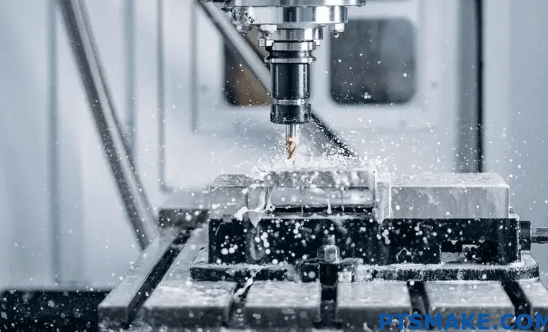
Metal CNC machining is one of the most versatile and widely used manufacturing processes in the modern industrial world. From automotive components and aerospace structural parts to medical implants and consumer electronics, CNC-machined metal parts are found in virtually every industry. This guide covers the key metals used in CNC machining, the processes involved, and how to select the right approach for your specific application.
Common Metals Used in CNC Machining
The selection of metal significantly influences machining strategy, cutting parameters, tooling selection, and achievable tolerances and surface finishes. Understanding the properties of common engineering metals helps both designers and machinists make better decisions.
Aluminum Alloys
Aluminum is the most commonly CNC-machined metal due to its excellent machinability, high strength-to-weight ratio, corrosion resistance, and wide range of alloys. It machines at high speeds with excellent surface finish. Common alloys include 6061, 7075, 2024, and 5052.
Stainless Steel
Stainless steel is significantly more challenging to machine than aluminum due to its work-hardening tendency, lower thermal conductivity, and higher strength. However, its corrosion resistance and hygiene properties make it essential for medical, food processing, and marine applications.
Titanium Alloys
Titanium’s combination of high strength, low weight, excellent corrosion resistance, and biocompatibility makes it ideal for aerospace and medical applications. However, its low thermal conductivity, high strength, and tendency to work-harden make it among the most challenging metals to machine.
CNC Machining Processes for Metal Parts
Several CNC machining processes are routinely applied to metal parts, often in combination to achieve the required geometry, tolerances, and surface quality. Understanding each process helps designers create parts that can be efficiently manufactured.
Multi-Axis Milling for Complex Geometries
5-axis CNC milling can produce complex 3D geometries including undercuts, compound angles, and sculptured surfaces in a single setup. This capability reduces fixturing costs, improves accuracy, and enables the production of parts that would be impossible with conventional 3-axis machining.
- CNC milling for prismatic parts and complex profiles
- CNC turning for cylindrical components and threads
- EDM (electrical discharge machining) for hard materials and intricate features
- Grinding for ultra-precise dimensions and surface finish
- Drilling and boring for precision holes
Secondary Operations for Metal CNC Parts
Most CNC-machined metal parts require secondary operations to achieve their final properties and appearance. These include heat treatment, surface finishing, coating, plating, and anodizing.
- Anodizing for aluminum: improves corrosion resistance and enables color coding
- Hard chrome plating for wear resistance
- Powder coating for protective decorative finish
- Heat treatment for improved strength and hardness
- Passivation for stainless steel corrosion protection
See also: The Sociology of Technology
Frequently Asked Questions
Which metal is easiest to CNC machine?
Aluminum is generally considered the most machinable common engineering metal. Its low strength, excellent thermal conductivity, and good chip formation allow high cutting speeds, long tool life, and excellent surface finishes compared to steels or titanium.
Can CNC machining be used for hardened steel?
Yes, CNC machining of hardened steel (up to 65 HRC) is possible using ceramic or cubic boron nitride (CBN) cutting tools. Hard turning and grinding are common approaches for finishing hardened steel components, often replacing grinding for many applications.
What is the most cost-effective metal for CNC machining?
6061-T6 aluminum is generally the most cost-effective choice when its material properties are sufficient, as it machines quickly, has good tool life characteristics, and material costs are moderate. For higher strength requirements, free-machining steel grades such as 12L14 or 1215 offer good machinability at low material cost.
Conclusion
Metal CNC machining offers unmatched versatility for producing precision parts from virtually any engineering metal. metal CNC machining. By understanding the machining characteristics of your chosen material, selecting the appropriate CNC process, and designing parts with manufacturability in mind, you can achieve excellent results efficiently and economically. Work with an experienced CNC machining partner who can provide materials expertise and process recommendations that optimize quality and cost for your specific application.