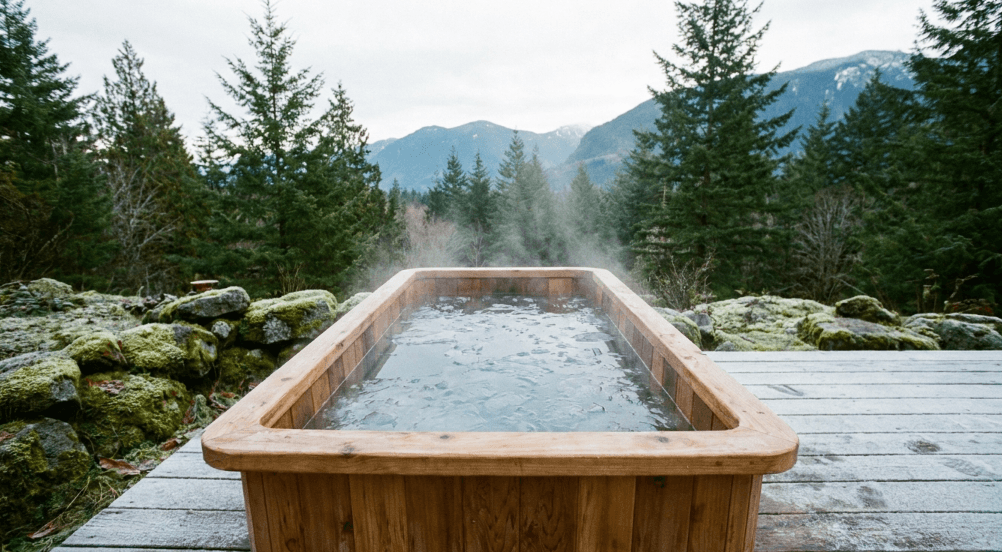
Four accessories carry real weight on a cold plunge budget: a GFCI-protected electrical setup for any chiller or pump, a floating thermometer to keep sessions consistent, entry steps or a handrail for anything deeper than about two feet, and an insulated lid to cut evaporation and heat gain between uses. Everything past that, dedicated timers, branded skimmer nets, decorative covers, is convenience rather than necessity, and a plain kitchen timer or pool net does the same job for a fraction of the cost.
Why Does GFCI Protection Come First on This List?
This is the one item that is not really optional. Any chiller, circulation pump, or filtration unit plugged in near standing water needs to run through a ground-fault circuit interrupter, either a GFCI outlet or a GFCI breaker at the panel, full stop. The stakes are higher than with most home electrical setups precisely because a person is sitting in the water the equipment is powering. If a budget install skips a proper electrician visit to confirm GFCI protection on the circuit, that is the one corner not worth cutting to save money.
Beyond the outlet itself, a weatherproof outlet cover for any outdoor installation is a small, inexpensive add, usually under $15, that keeps rain and splashed water away from the plug connection between sessions. It is easy to skip since it does not affect whether the tub runs, but it protects the one part of the setup where water and electricity sit closest together over months of outdoor use.
Does a Floating Thermometer Actually Change the Experience?
It changes more than people expect before they own one. Cold water immersion research generally reports outcomes tied to a specific temperature range and duration, and without a thermometer, a home plunge is really a guess dressed up as a routine, since ambient conditions, refill water, and time of day all shift actual water temperature more than most people realize. A basic floating unit costs under $20 and takes the guesswork out entirely, letting you confirm the tub is actually sitting at 45, 50, or 55 degrees Fahrenheit rather than assuming the chiller display is telling the full story.
Are Entry Steps Worth the Extra Cost?
For a tub under about knee depth, probably not. Past roughly two feet of depth, though, steps or a fixed handrail earn their keep. Cold water immersion triggers a fast spike in heart rate and blood pressure as part of the body’s normal cold shock response, and that combined with a slick wet surface is exactly the moment a stumble is most likely. A simple two or three step unit runs $40 to $120 depending on material, well worth it compared to the alternative of climbing over a tall tub edge every session on a wet floor.
A rubber-backed non-slip mat placed on the ground next to the tub is a related, even cheaper add, usually under $25, and it addresses a different risk than the steps do. Most slips happen stepping out onto a wet floor after a session, not while entering the water itself, so a mat covering that landing spot closes a gap that steps alone do not fully solve.
A pair of neoprene booties or gloves, usually $20 to $40, is worth mentioning here too, not as a comfort upgrade but because numb hands and feet make exiting a tub and gripping a handrail genuinely harder in the first minute after a cold session. Anyone who plunges through winter, when garage or patio floor temperatures drop as well, tends to get more practical use out of booties than anyone plunging only in warmer months.
What About Water Testing and Sanitizer Accessories?
If the tub uses any sanitizer at all, chlorine, bromine, or an ozone generator, test strips are a low-cost way to confirm it is actually working rather than trusting the system blindly. A hundred-count pack runs under $15 and takes seconds to use. Filtration and sanitizer choice varies a lot by tub, some rely on a small sand or cartridge filter paired with minimal chemical dosing, others lean more on ozone, and testing strips are the one accessory that works across all of those setups the same way.
What’s the Best Value Accessory for the Money?
An insulated lid, typically $50 to $150 depending on tub size and material, does more per dollar than almost anything else on this list. It blocks debris from falling in, cuts evaporation that would otherwise raise room humidity, and reduces the heat gain a chiller has to fight between sessions, which lowers the electric bill over a season. Shoppers pricing out a full accessory kit alongside the tub itself can check current sizing and bundled options through SweatDecks before deciding what to buy separately versus what comes included.
What Does the Research Say the Accessories Are Actually Supporting?
None of these accessories change the underlying physiological response to cold water immersion, they just make sessions safer, more consistent, and cheaper to run. The evidence itself remains association-level and mixed rather than a guaranteed outcome. A 2025 systematic review and meta-analysis in PLoS One found genuinely inconsistent results across health and wellbeing outcomes tied to cold water immersion. A Cochrane review on cold-water immersion for muscle soreness after exercise found a modest reduction in soreness with notably low-certainty evidence, and a 2023 meta-analysis in Frontiers in Physiology found some benefit for fatigue recovery and exercise performance in the sessions studied. A thermometer and a lid make those sessions more repeatable, which matters if you want any chance of the outcomes those studies describe, but neither accessory changes what the research itself actually shows.
Frequently Asked Questions
What is the single most important cold plunge accessory?
GFCI protection for any electrical component is not optional. A floating thermometer is the next accessory that most affects consistency.
Do I need entry steps for a cold plunge?
For anything deeper than about two feet, steps or a handrail make entry and exit meaningfully safer given the cold shock response.
Are water test strips worth buying for a home cold plunge?
Yes, if the tub uses any sanitizer. Strips cost under $15 for a hundred uses and confirm levels are in a safe range.
Is an insulated lid really necessary on a budget setup?
It is one of the highest-value accessories for the price, cutting evaporation, heat gain, and chiller cycling between sessions.
What accessories are genuinely optional?
Dedicated timers, branded skimmer nets, and decorative covers add convenience but a kitchen timer or pool net works just as well.
References
- “Effects of cold-water immersion on health and wellbeing: A systematic review and meta-analysis.” PLoS One, 2025. https://pubmed.ncbi.nlm.nih.gov/39879231/
- “Cold-water immersion (cryotherapy) for preventing and treating muscle soreness after exercise.” Cochrane Database of Systematic Reviews, 2012. https://pubmed.ncbi.nlm.nih.gov/22336838/
- “Effects of cold water immersion after exercise on fatigue recovery and exercise performance: meta analysis.” Frontiers in Physiology, 2023. https://pubmed.ncbi.nlm.nih.gov/36744038/