
By: Tony Saidiani
The healthcare system in the U.S. offers a variety of facilities and programs designed to meet the needs of different populations. Among these, PACE Program of All-Inclusive Care for the Elderly stands out as a comprehensive model that integrates medical care, social services, and community support for older adults. Understanding PACE and how it differs from traditional healthcare facilities can help patients, families, and caregivers make informed choices.
What Is PACE
PACE is a Medicare and Medicaid program designed to help older adults live safely in the community while receiving coordinated care. Unlike traditional nursing homes or assisted living facilities, PACE provides a full spectrum of services including
- Primary and specialty medical care
- Prescription management
- Physical, occupational, and recreational therapies
- Social and nutritional support
- Transportation to appointments and community activities
The core goal of PACE is to allow participants to remain independent at home or in their community for as long as possible.
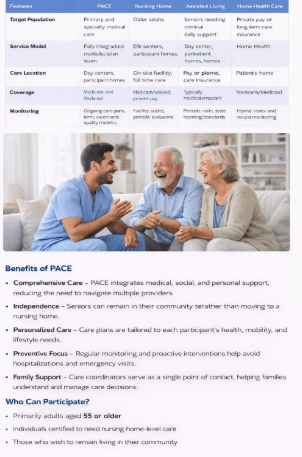
How PACE Differs from Other Healthcare Programs
PACE vs Nursing Homes PACE allows seniors to live in their homes or community while receiving full coordinated medical and social care. Nursing homes require residents to live onsite with full-time custodial and medical care. PACE is community-based, while nursing homes are institutional.
PACE vs Assisted Living PACE provides comprehensive care including medical, social, therapy, and transportation services, and costs are usually covered through Medicare or Medicaid. Assisted living focuses mostly on daily living support such as meals, bathing, and medication reminders, with medical care being limited and often paid separately.
PACE vs Home Health Care PACE uses a multidisciplinary team to coordinate all care needs, not just skilled medical services. Home health care provides medical care at home such as nursing or therapy but does not integrate social services, transportation, or ongoing daily care.
PACE vs Traditional Medicare or Medicaid Services PACE combines all services into a single, coordinated program, reducing confusion and care gaps. Traditional Medicare or Medicaid participants must manage multiple providers and services separately, which can lead to fragmented care.
Summary PACE emphasizes integration and comprehensiveness. It is designed to keep seniors in their homes and communities. Other programs focus on medical care or daily living support, often in institutional settings.
See also: Understanding Blood Transfusion Filters in Modern Healthcare
Benefits of PACE
Comprehensive Care: PACE integrates medical, social, and personal support, reducing the need to navigate multiple providers Independence: Seniors can remain in their community rather than moving to a nursing home Personalized Care: Care plans tailored to each participant’s health, mobility, and lifestyle needs Preventive Focus: Regular monitoring and proactive interventions help avoid hospitalizations and emergency visits Family Support: Care coordinators serve as a single point of contact for families
Who Can Participate
Adults aged 55 or older Certified to need nursing-home-level care Wish to remain living in their community All medical, social, and supportive services are included through a single program
Monitoring and Oversight
Multidisciplinary Team Oversight: Physicians, nurses, therapists, social workers, and dietitians review care plans regularly Regulatory Compliance: Programs audited by state and federal agencies, following Medicare and Medicaid standards Quality Metrics: Track patient satisfaction, hospitalization rates, and preventive care adherence Individual Assessments: Regular health and social evaluations adjust care as needs change
Conclusion
PACE offers a holistic alternative to nursing homes and assisted living. It integrates medical care, social support, and community services. It helps older adults stay independent, healthy, and engaged. It provides families and caregivers with structured oversight and personalized care plans. PACE demonstrates that comprehensive, patient-centered care can be delivered outside of institutional settings while maintaining high-quality monitoring and support.
This article was published on Medium. Click here.